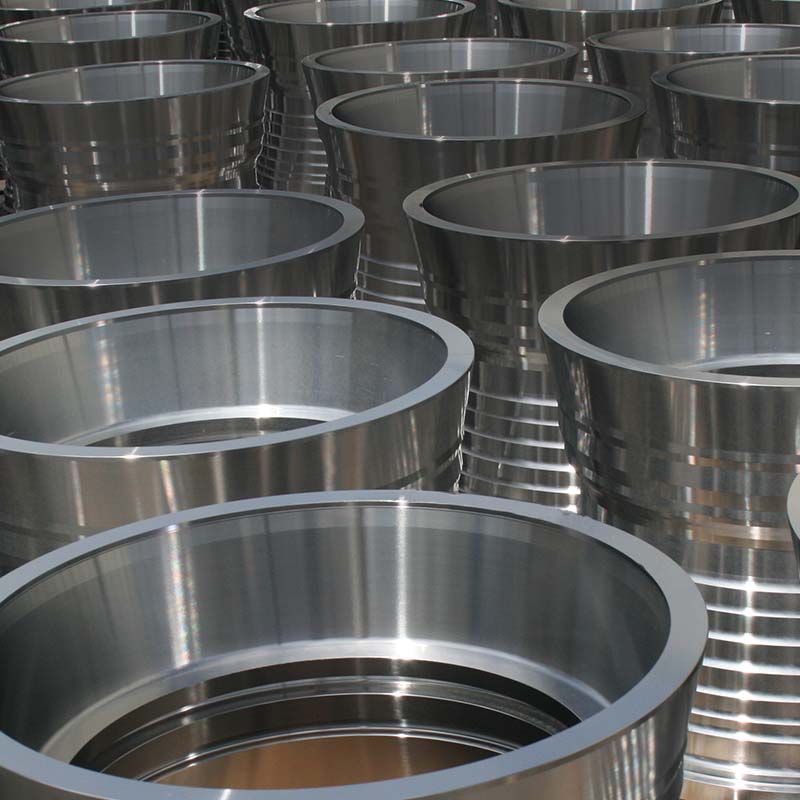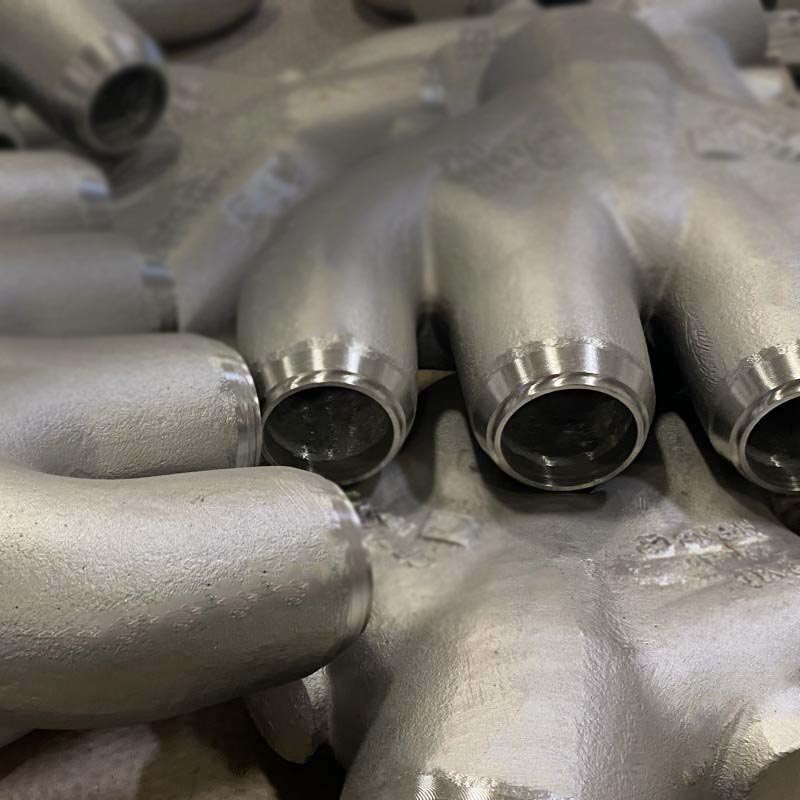
Overview
Alloy HH (25-12) is higher in chromium than MTEK 20-10 and will resist scaling to 2000° F with applications in the 1600 to 1900° F range. For maximum strength above 1500° F, the composition must be balanced to insure a stable austenitic structure. For applications requiring higher ductility at service temperatures, the composition can be balanced to give some ferrite in the structure. This increase in ductility is accompanied by a considerable loss in creep strength. Specification ASTM A447 designates two classes of the alloy: Type I, with some ferrite in the structure, for maximum ductility, and Type II, completely austenitic for maximum strength.
Typical Uses
Convection furnace components, grate bars, rabble arms, radiant tubes, and refractory support hardware.
MetalTek Designation
MTEK 25-12
Poured At:
Carondelet Division, Sandusky International Division, Wisconsin Centrifugal Division, Wisconsin Investcast Division
Similar Specifications
Cast UNS: J93503
Wrought UNS: S30900
Wrought Grade: 309
Cast Grade: HH
Cast ASTM: A297, A608
Typical Chemical Composition (% by wt.)
Aluminum: n/a
Carbon: 0.20-0.50
Chromium: 24-28
Manganese: 2
Iron: n/a
Copper: n/a
Nickel: 11.0-14.0
Lead: n/a
Tin: n/a
Silicon: 2
Zinc: n/a
Minimum Mechanical Properties
Heat Treatment: Not Heat Treated
Frequently Asked Questions
Heat resistant stainless steel refers to alloys designed to maintain mechanical properties and resist oxidation at elevated temperatures.
Applications include furnace parts, heat exchangers, and components in petrochemical plants.
Heat resistant stainless steels can withstand temperatures up to 1,150°C (2,100°F), depending on the grade and exposure time.
High chromium and nickel contents stabilize the austenitic structure and form a protective oxide layer, resisting scale and oxidation.